
Water Damage Coverage for Airbnb & Short-Term Rentals
Water damage is one of the most common claims short-term rental hosts face, and with guests coming and going, it can start in more ways than you’d expect: an overflowing tub, a backed-up drain, a burst pipe. And when the property sits empty between stays, a problem that isn’t caught and reported quickly can escalate. Many hosts assume their existing Homeowners or Landlord policy has them covered. It often doesn’t. Understanding how water damage coverage works for short-term rentals can help you avoid a painful and expensive surprise at claim time.

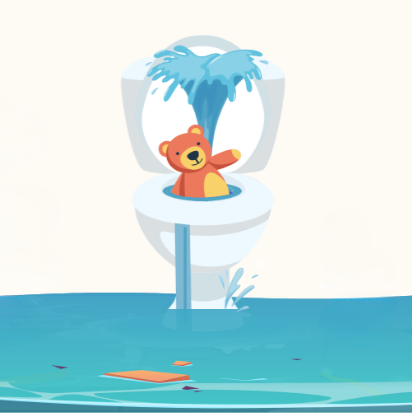
What is Water Damage Coverage for Short-Term Rental Properties?
Water damage coverage can protect short-term rental properties from physical loss caused by covered events, such as accidental discharge or leakage from plumbing or appliances. Depending on the policy, covered damage may include walls, flooring, cabinetry, structural elements and contents.
For Airbnb and short-term rental hosts, effective coverage must also account for frequent guest turnover, extended vacancy periods, and the income interruption that occurs while repairs are underway.
Why Water Damage is a Higher Risk for Short-Term Rentals
Unlike owner-occupied homes, short-term rentals can often go unmonitored between stays—and a leak that starts once a guest checks out may not be discovered until the cleaner arrives for a typical turnover focused on resetting the space or the next guest checks in. Guests don’t always report problems, and hosts aren’t typically or continually onsite to catch early warning signs. There’s also a behavioral dimension that owner-occupied homes don’t have: guests aren’t invested in the property the way an owner is and therefore may not take the same level of care.
Short-term rentals get heavier use on fixtures, appliances, and plumbing, and guests may not think twice about what gets flushed down the drains. A small leak that goes unreported can turn into a major loss. Like any policy, coverage is subject to terms, conditions, and exclusions, including for wear and tear and for leaks that continue or repeat over an extended period. Inspecting between stays and reporting problems promptly helps limit the damage and protect both your property and your claim.
Standard Homeowners and Landlord policies are built for owner-occupied homes and long-term tenants, so losses tied to short-term, transient rentals often fall outside what they’re designed to cover. Once paying guests start rotating through, your property operates more like a micro-hotel. That’s why coverage designed for how your property is actually used matters.
Real Claim: How Proper Covered a $130,000 Water Loss
Jason, a short-term rental owner, got the call no host wants. A guest’s mistake had caused a catastrophic water loss at his property. The final damage totaled more than $130,000.
Jason had previously carried a traditional Homeowners policy. His local broker assured him it would cover his short-term rental. It wouldn’t have—Commercial activity exclusions would have left him holding the entire loss. Because he had Proper, this loss was covered—structural damage, contents, mitigation, and income.
Lost income was calculated using his actual booking history and seasonal rates, not a generic daily estimate that would have underpaid him by thousands. Coverage is subject to policy terms and the specific circumstances of the loss.
How Your Standard Policies Respond to Water Damage from Airbnb Guests
Coverage for water damage at short-term rentals heavily depends on the type of policy in place:
Homeowners (HO) insurance is designed for owner-occupied residences. Most HO policies restrict or exclude coverage when a property is used for short-term rental activity through a business activity exclusion in the policy. In 2026, The Insurance Information Institute reported that many short-term rental owners and Airbnb hosts are unknowingly misinsured, as Homeowners policies often exclude or limit coverage for rental-related losses, leaving owners exposed to major property damage, liability, or loss-of-income claims.
Landlord (DP-3) insurance assumes long-term tenants and stable occupancy. It typically does not address guest-caused damage, high turnover, or vacancy-related losses common to short-term rentals.
Short-term rental insurance policies, like The Proper Policy, are designed with short-term rental exposure in mind with no occupancy restrictions, no sublimit on backup of sewers and drains, and income coverage during a covered property claim.
A Covered Water Damage Claim Under the Proper Policy
When a covered water loss occurs, The Proper Policy can respond across different dimensions of the claim.
Structural Damage
From the source of the loss outward: flooring, drywall, subfloor, cabinetry, and other structural elements.
Contents Coverage
Furniture, appliances, decor and other contents inside the rental.
No Sub-Limit Backup of Sewer and Drains
The average sewer backup claim for a short-term rental in 2024 ran $18,000—not including lost income during the repair period. Proper has no sublimit on backup of sewer and drain losses so if a covered claim occurs you have coverage up to your full policy limits.
Loss of Business Income Protection
If a covered loss forces your property offline by making it unlivable, Proper’s Business Income coverage calculates actual loss sustained using historical and seasonal booking data, so you’re compensated for what you would have earned.
Why Airbnb Water Damage Claims Get Denied by Standard Policies
Most denied water damage claims under standard policies come down to five policy exclusions. Short-term rentals are uniquely exposed to all of them. Before assuming you’re covered, pull your current policy and check each one.
The Vacancy Exclusion in a Homeowners Policy: Many Homeowners Policies strip coverage after 30 to 60 consecutive days unoccupied. Burst or frozen pipes during a slow season are a frequent casualty. To check your coverage: Look for the day threshold in your vacancy clause and confirm whether your off-season or between-stay gaps could surpass it.
The Business Activity Exclusion for Short-Term Rentals: Short-term rental activity is a commercial activity. Sewer backups—the single most common STR claim—are regularly denied under this exclusion when the property was actively rented. To check your coverage: Look for an exclusion referencing “business,” “commercial,” or “rental activity.”
Sub-Limits on Back Up of Sewers and Drains: Most policies cap backup claims well below actual loss costs—sub-limits of $5,000 to $10,000 are common, and nowhere near sufficient for a real sewer loss. To check your coverage: Look for a separate dollar cap on sewer or drain backup that’s lower than your standard property limit.
The Calculation of Lost Rental Income During a Water Loss: If your policy includes rental income or business interruption coverage, the calculation method determines what you actually receive. To check your coverage: Look for whether the policy pays “actual loss sustained” based on STR booking history and seasonal revenue, or “fair rental value,” which is based on comparable long-term rentals in your area. For a short-term rental generating peak-season rates, that distinction can mean thousands of dollars on a single claim.
The Wear and Deferred Maintenance Exclusion: If an insurer can tie the cause to deterioration, the claim is denied. Aging supply lines, corroded fittings, and worn appliance hoses are common culprits — and washing machine or dishwasher line failures often fall here. All policies have this exclusion, including The Proper Policy. Proper’s policy, like many policies, includes an ensuing loss provision. If a failed pipe causes water damage, the pipe itself isn’t covered, but the resulting water damage may be, subject to your policy’s terms, conditions, and exclusions.
If your current policy has any of these gaps, it wasn’t designed to protect you from short-term rental risk. A policy that explicitly covers short-term rental activity, vacancy, and guest-caused damage—like Proper’s industry-leading Commercial Homeowners policy—is the best way to know your coverage is in place when it matters.
Real Situations of Airbnb Water Damage
Water damage is one of the most common claims short-term rental hosts file, and no two losses look the same. The stories below are real short-term rental water damage claims that show how a loss starts, how fast it escalates, and how coverage responds when it does.
STR Flooded Before the First Guest Checked In
What Is A Covered Cause Of Loss?
$400k Claim from an Ice Maker

Airbnb Water Damage Insurance: Get Coverage Designed For Short-Term Rental Risks
Water damage rarely stays contained. What starts as a pipe failure under a sink can spread to subfloor, cabinetry, adjacent walls, and the basement below—and the longer it goes unaddressed, the higher the repair bill and the longer your property is offline. Regular inspections and prompt reporting make a real difference.
For short-term rental hosts, the exposure is higher than it is for standard homeowners, and the coverage gap in traditional policies is real. Checking how your policy responds to a water loss at your short-term rental, before one happens, gives you the chance to address your coverage now, before one sinks your bottom line.
Frequently Asked Questions about Airbnb Water Damage Insurance
Does Homeowners insurance cover water damage at a short-term rental?
Standard Homeowners insurance is designed for owner-occupied residences. If you’re operating a short-term rental, many Homeowners carriers will restrict or deny coverage under a business activity exclusion. Even policies that don’t explicitly exclude rental activity may carry vacancy clauses or sub-limits that significantly reduce what gets paid. A policy built for short-term rental use—one that explicitly covers guest activity and vacancy—is the only way to know your coverage is in place when it matters.
Does Airbnb AirCover cover water damage?
AirCover may offer some protection for some guest-caused damage scenarios, but it is not a replacement for a standalone insurance policy. AirCover does not cover lost revenue, mitigation costs, or water losses that occurred when no guest was present.
Is flood damage the same as water damage?
No. Flood damage—water entering from an external source such as storm surge, rising rivers, or surface runoff—is a separate peril that requires a standalone flood insurance policy. Water damage coverage should address internal water events like burst pipes, appliance failures, overflows, and sewer backups.
What if a guest caused the water damage?
The Proper Policy is designed to cover guest-caused damage with no sub-limit on backup of sewers and drains. Most Homeowners and Landlord policies either exclude guest-caused losses or handle them inadequately. If a guest overflows a tub or causes a plumbing failure, the claim is treated like any other covered loss.
What does the average water damage claim cost?
The average sewer backup claim for a short-term rental in 2024 ran $18,000, not including lost rental income during the time the property was forced offline. Larger losses involving structural damage, mitigation, and extended revenue interruption can exceed $100,000—as Jason’s claim illustrates. Catching and reporting a leak early can make a significant difference in the size of the loss.
Latest
Resources

Can I Be an Airbnb Host in South Carolina? What Hosting Actually Requires in 2026

Cold-Season Success: Prepare Your Short-Term Rental for Winter

Airbnb’s AirCover Protection: What It Covers (and Why It’s Not Insurance)
