
Texas Airbnb Laws and Regulations: What Texas Hosts Need to Know
Many municipalities in Texas have expanded upon stringent Airbnb laws and regulations recently. From updating safety procedures, permit processes, and insurance policy requirements, Texas is making strides to support short-term rental hosts. In towns or cities where the laws are still limiting, hosts should continue staying up to date with current laws and regulations.
If you have questions about short-term rentals in Texas, contact Proper Insurance. Our agents are experts in the vacation rental industry in your area. Call 888-631-6680 today.
- Alpine, Texas STR Laws
- Arlington, Texas Vacation Rental Laws
- Austin, Texas Short-Term Rental Laws
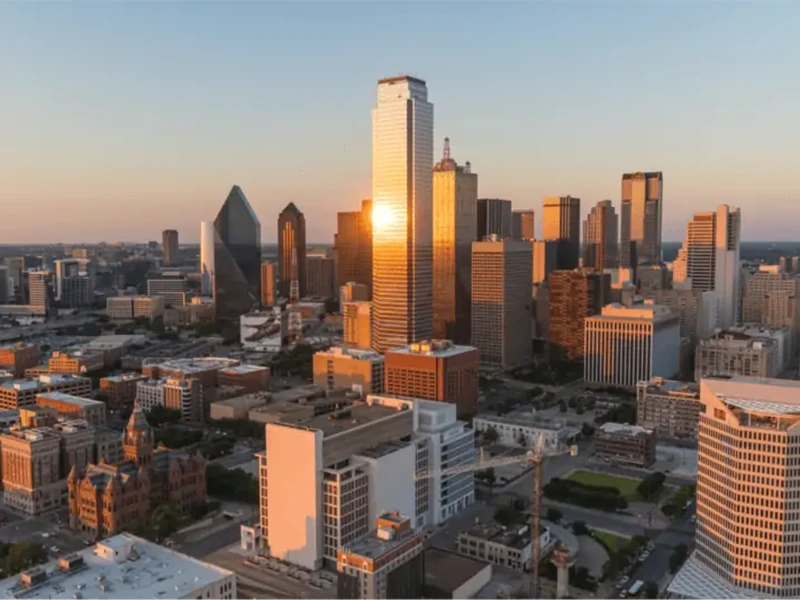
- Dallas, Texas Airbnb Laws
- World Cup 2026 in Dallas
- Frisco, Texas STR Regulations
- Garland, Texas Airbnb Laws
- Grapevine, Texas STR Regulations
- Houston, Texas Airbnb Laws
- 2026 FIFA World Cup in Houston
- Marble Falls, Texas Vacation Rental Laws
- Plainview, Texas STR Regulations
- San Antonio, Texas Airbnb Rules
- Wimberly, Texas STR Laws
Alpine, Texas STR Laws
Updates to Alpine Airbnb Laws and Regulations
The City of Alpine regulates short-term rentals through its Short-Term Rental Special Use Permit Program, which requires hosts to obtain a Special Use Permit (SUP) before operating.
- Licensing: Hosts also must provide the following details to the city when submitting their permit application form with a corresponding fee of $350 (cash, check, or money order payable to the City of Alpine). Application requirements include:
- A copy of a property insurance summary that states STR coverage is included and/or a complete insurance waiver. If the operator chooses to opt out of property insurance, a General Release of Liability MUST be signed by the operator.
- A letter describing the proposed STR use, detailing whether the proposed STR will or will not cause substantial harm to the value, use, or enjoyment of the other properties in the neighborhood. Also, describe how the proposed STR will add to the value, use, or enjoyment of the other properties in the neighborhood.
- A sketch floor plan of the dwelling with a dimensional room layout. Please identify sleeping areas, evacuation route(s), and location of fire extinguishers (note this!).
- Proof of STR property ownership, such as property tax documents, deeds, or a copy of the title (all owners must sign the application).
- Rationale: Alpine requires hosts to describe how their short-term rental will better the community, such as an influx of business to local shops and restaurants.
- Guest Communication: Hosts must also provide the following details to guests upon booking:
- Local Contact: The 24-hour contact information of the STR owner or local representative.
- Neighborhood info such as parking, noise restrictions, trash collection schedules, etc.
- Emergency and non-emergency telephone numbers for police and fire departments.
- Instructions for obtaining severe weather, natural, or man-made disaster alerts.
- More Information: Find more info on Airbnb laws in Alpine, TX.
Arlington, Texas Vacation Rental Laws
Updates Insurance Requirements for Airbnb Short-term Rentals
Arlington regulates short-term rentals through Ordinance No. 19-014 and Ordinance No. 19-022, adopted April 23, 2019. These ordinances establish where STRs may operate, create registration and permitting requirements, and outline safety, occupancy, parking, and noise standards. Arlington’s STR program is highly location-specific—hosts must confirm their property is in an eligible zoning district before applying.
The short-term rental regulations and Airbnb laws in Arlington, TX, mirror various other cities that have accepted and adopted basic regulations. The regulations include:
- Licensing: Arlington requires all short-term rentals to obtain an STR Permit through ArlingtonPermits.com. Permits must be renewed annually, are non-transferable, and are limited to one permit per address. Applicants must submit owner and operator details, City HOT (Hotel Occupancy Tax) registration information, a plot plan showing available off-street parking, and a dimensioned floor plan with emergency evacuation routes.
- Zoning: All zoning districts inside the Short-Term Rental Zone (STR Zone), anchored by the Entertainment District and extending about one mile in every direction. The City provides an easy way to check the zoning of your Arlington STR. Eligible areas include:
- The RM-12 (Residential, Medium Density) zoning district
- The RMF-22 (Residential, Multi-Family) zoning district
- All non-residential zoning districts
- All mixed-use zoning districts
- Occupancy Restrictions: Arlington caps STR occupancy at 2 guests per bedroom + 2 additional guests, up to a maximum of 12. Physical conversion of a home to add bedrooms for STR use is prohibited and may reduce allowable occupancy. There is a 30-day maximum occupancy limit in Arlington, TX, Airbnbs.
- Insurance: Arlington requires a minimum of $1 million in liability insurance.
- Parking: Guest parking is limited to the number of available off-street spaces only. Parking on grass or unapproved surfaces is not allowed.
- Noise & Quiet Hours: No amplified sound or outside congregation between 10 p.m. and 9 a.m.
- Trash: Trash is to be placed on the curb after 7 p.m. the evening before the scheduled pickup.
- Other: Premises are not to be used as a Banquet Hall. Physical conversion of premises (to add bedrooms) is prohibited.
- More Information: Learn more about Airbnb laws in Arlington, TX.

Austin, Texas Short-Term Rental Laws
Understand Austin’s Airbnb Laws & STR Regulations
As of September 11, 2025, the Austin City Council requires short-term rental (STR) platforms to collect and remit Hotel Occupancy Taxes (HOT) on behalf of operators and comply with local laws. Further regulatory changes, effective July 1, 2026, will shift to tighter laws regarding licenses, taxes, and occupancy. STRs will continue to be permitted in all residential areas, provided operators hold valid licenses.
- Licensing: All short-term rental properties in Austin are required to obtain a valid operating license from the City of Austin. These licenses must be renewed annually. Failure to secure a license can result in fines or legal action. To apply for or renew a license, property owners must provide documentation such as proof of ownership, a Certificate of Occupancy or certified inspection, and the appropriate fee payment. More details can be found on the city’s Code Compliance Guide to Short-Term Rentals.
- Coming July 1, 2026: STR licenses will transition to a two-year renewal cycle (biennial licensing), reducing annual paperwork and compliance processing.
- Types of STRs: The regulations classify STRs into three categories, and each type has specific zoning and occupancy limits:
- Type 1: Owner-occupied or associated premises, such as a single room in a home.
- Type 2: Non-owner-occupied properties, typically rented out entirely as vacation homes.
- Type 3: STRs in multi-family buildings or complexes.
- Coming July 1, 2026: Enforcement of zoning and spacing limits for Type 2 and 3 STRs will be expanded. STRs under the same ownership must be spaced at least 1,000 feet apart unless located on the same parcel.
- Occupancy Limits: Austin limits the number of guests allowed per STR property. Generally, no more than six unrelated adults may stay in a single-family property at one time. Additional regulations may apply to multi-family STRs or properties exceeding certain square footage.
- Coming July 1, 2026: The City will begin stricter enforcement of the 2 guests per bedroom plus 2 occupancy formula, with a cap of 10 total occupants per unit.
- Noise, Trash & Safety Compliance: To ensure neighborhood harmony, STR owners must comply with local noise ordinances and provide adequate trash disposal. Additionally, properties must meet safety standards, including working smoke detectors, carbon monoxide detectors, and fire extinguishers. For more information on safety and compliance, refer to Austin’s STR compliance guidelines.
- Prohibited Uses & Penalties: STRs cannot be used for commercial events or large parties. The city employs active enforcement measures, including surprise inspections, complaint investigations, and penalty assessments for violations. Repeat offenders may face license revocation and court-ordered penalties.
- Taxes: STR operators are required to collect and remit both the Texas state hotel occupancy tax and the City of Austin’s hotel occupancy tax. Failure to comply with tax obligations can result in penalties and interest.
- Coming July 1, 2026: STR platforms (e.g., Airbnb, VRBO) must display valid Austin license numbers on all listings and will be required to remove non-compliant listings upon notice from the City.
- More Information: For more information, review Austin’s official STR regulations.
Dallas, Texas Airbnb Laws
Understand Vacation Rental Rules in Dallas
Dallas has established detailed regulations governing short-term rentals to ensure residential integrity, public safety, and compliance with city laws. These guidelines address licensing requirements, operational restrictions, and tax obligations for STR operators.
Note: As of December 6, 2023, enforcement of the new short-term rental registration and zoning ordinances is under a temporary court injunction, but Dallas continues to enforce existing rules for property standards, noise, private nuisances, and hotel occupancy tax (HOT).
- Licensing: All short-term rental operators in Dallas must obtain a city-issued registration for their property. The registration must be renewed annually, and the property must comply with applicable zoning laws and safety standards.
- Zoning Laws: STRs in Dallas are categorized by zoning laws, which regulate where such properties can legally operate. Hosting commercial events, large gatherings, or activities that disturb the neighborhood is strictly prohibited.
- Occupancy Limits: No more than 12 occupants are permitted per rental unit, with a limit of three occupants per bedroom.
- Noise: The use of amplified sound equipment that is audible beyond the property line is prohibited between 10:00 PM and 7:00 AM.
- Point of Contact: Operators and hosts are required to provide a 24-hour local contact person who can address issues related to the property within one hour when notified about an emergency condition at the STR.
- Safety Compliance: STR properties in Dallas must meet specific safety requirements, including the installation of functional smoke detectors, carbon monoxide detectors, and fire extinguishers. Properties are also subject to routine inspections to ensure compliance with city safety codes.
- Taxes: Dallas requires STR operators to collect and remit the 6% Texas state hotel occupancy tax as well as a 9% local occupancy tax on eligible stays of fewer than 30 days. To avoid penalties and interest, operators should get set up with the city for HOT, file on schedule, and keep solid records of their bookings and revenue.
- Temporary Tax Injunction: Although parts of Dallas’s new STR ordinance are tied up in court, the City of Dallas has been clear that this does not change your obligation to register for and pay hotel occupancy taxes (HOT).
- More Information: For further details, review the City’s official Short-Term Rentals page and the Hotel Occupancy Tax page.
World Cup 2026 in Dallas
Dallas Airbnb Laws Ahead of the 2026 World Cup
Planning to host World Cup 2026 fans in Dallas? Dallas’s short-term rental rules do not loosen for major events. STR operators must hold a valid city registration, follow all zoning and safety requirements, and comply with the city’s strict occupancy cap of 3 occupants per bedroom (maximum 12 per unit). Even with parts of the newer STR ordinance under a temporary court injunction, Dallas continues to enforce property standards, noise restrictions, nuisance rules, and—critically—hotel occupancy taxes: the 6% Texas state HOT plus the 9% Dallas local HOT on stays under 30 days. World Cup bookings are treated the same as any other Dallas STR stay—make sure your registration, tax accounts, safety equipment, and 24/7 local contact are fully compliant before you list.
How Much Can I Make Hosting During the World Cup in Dallas?
Dallas is expected to lead all U.S. host cities in economic impact, with projected visitor spending topping $157 million. STR nightly rates may rise from $160 to around $304, creating one of the strongest earning opportunities for compliant Dallas-area hosts—especially those near Arlington and Dallas transit corridors.
Frisco, Texas STR Regulations
Read Airbnb Laws in Frisco, TX
The City of Frisco adopted its short-term rental ordinance on August 17, 2021, establishing registration, safety, and operational requirements for hosts renting a property for fewer than 30 consecutive days. These rules apply to STRs operating in single-family homes, garage apartments, duplexes, triplexes, fourplexes, and multifamily units. Frisco’s STR program was created to support neighborhood stability, ensure safe lodging practices, and require proper hotel occupancy tax compliance.
Application for a Short-Term Rental Permit shall be made through the City’s Online Permit Portal. Each application for a short-term rental permit shall be accompanied by a non-refundable $300 application fee and shall include the following information:
- Licensing: Frisco requires all STR operators to obtain a Short-Term Rental Permit through the City’s Online Permit Portal. A non-refundable $300 application fee is due at submission, and permits must be renewed annually. Applications must include:
- Applications must include:
- A list of all owners, operators, and agents, including names, addresses, email addresses, and current phone numbers.
- The name, address, and 24-hour phone number of a local contact who can respond to complaints within one hour or less.
- A signed acknowledgement that an STR permit does not override private restrictions, including HOA rules, deed restrictions, leases, or covenants prohibiting STR use.
- A labeled floor plan showing sleeping areas, the proposed maximum number of guests, evacuation routes, and the exact locations of smoke detectors and fire extinguishers.
- All guest safety information required under Section 18-466 of the Frisco Code.
- A sworn statement confirming the owner has complied—and will continue to comply—with all ordinance requirements, including obtaining annual third-party inspections of fire extinguishers in accordance with the current Fire Code.
- Any additional documentation required by the Director or designee.
- Safety: Frisco STRs must be equipped with properly installed and functioning smoke detectors throughout the property, and all fire extinguishers must be easily accessible and undergo annual inspections performed by a third party in compliance with the City’s Fire Code. Hosts must clearly communicate evacuation routes, guest safety procedures, and emergency instructions within the home.
- Local Contact: Operators must ensure the designated 24-hour contact is consistently available and able to respond to complaints or code concerns within one hour.
- More Information: Further information regarding Airbnb Short-Term rental laws and regulations can be found on the Frisco official website.

Garland, Texas Airbnb Laws
Understand Garland’s Airbnb Rules & STR Regulations
On September 2, 2025, the City Council of Garland, Texas, amended Ordinance No. 7403 and revised Chapter 26 (Article V1) to include short-term rentals (STRs). These updates are designed to protect neighborhood quality of life while ensuring guest safety. Enforcement of the new rules began Sept. 11, 2025.
- Licensing & Application: STRs in Garland, Texas, are regulated under the Single-Family/Short-Term Rental Program. The Garland STR application form requires a floor plan of the property, proof of liability insurance, other supporting documentation, and a yearly $500 licensing fee. Licenses must be renewed each year, and failure to comply can result in penalties. A separate application is required for each dwelling unit, including duplexes used for short-term renting. Applications must include information about the owner, property manager, and occupants.
- Inspections: All STRs are subject to a full inspection before initial licensing and an annual re-inspection before license renewal. Inspections focus on safety compliance, such as smoke detectors, fire extinguishers, and property maintenance.
- Enforcement & Penalties: The Garland Code Compliance Department oversees enforcement of STR rules. Operating without a valid permit or failing an inspection can result in fines, suspension, or revocation of the rental permit. Properties with three violations in a 12-month period may have their STR license suspended. Repeat violators may be required to enter into a Compliance Agreement with stricter operating conditions, such as occupancy limits, outdoor noise sensors, or quiet hours.
- Insurance: STR operators must maintain liability insurance with coverage of at least $250,000 per person and $1,000,000 per event. Proof of insurance is required with the license application.
- Minimum Stay Requirements: A 48-hour minimum stay is required for Airbnb guests in Garland, TX.
- Parking: STR guests are disallowed from on-street parking.
- More Information: Find more info on Garland’s Airbnb laws on the Garland STR Program Page.
Grapevine, Texas STR Regulations
Updated Laws for Grapevine, TX Vacation Rentals
The City of Grapevine regulates short-term rentals through its Zoning Ordinance, defining an STR as any dwelling or portion rented for fewer than 30 consecutive days. While the City previously prohibited STRs entirely in residential zoning districts, on January 16, 2024, the City Council adopted Ordinance 2024-007, allowing short-term rentals only in specific multifamily zoning districts (R-MF, R-MF-2) under strict conditions. This means short-term rentals in single-family residences remain prohibited city-wide.
- Licensing: Operating an STR in Grapevine requires obtaining a City-issued short-term rental permit, which is non-transferable and must be renewed annually. Each application must include a completed packet and a $500 fee. Applicants must provide the operator’s full contact information, including mailing address, email, telephone number, date of birth, and driver’s license number. If the operator is an entity rather than an individual, the application must identify the corporate representative authorized to act on the entity’s behalf and include State of Texas business filings confirming the entity’s good standing.
- Occupancy: The property cannot be physically altered to add bedrooms once it has been registered as an STR, and STRs may not host more than two people per bedroom or more than twelve occupants total.
- Usage Restrictions: The operator may use the property as an STR for no more than 180 days per calendar year, and must use or maintain the property for non-STR purposes for the remaining 180 days.
- Minimum Stay: STRs must be rented for a minimum of 24 hours per booking
- Eligibility & Zoning: Short-term rentals in Grapevine are permitted only when located within an eligible multifamily development with at least 50 units that has obtained a conditional use authorization from the City Council and a subsequent short-term rental permit.
- Insurance: Proof of $1 million in general liability insurance per occurrence is required, supported by a policy issued by an AM Best A-rated carrier authorized to operate in Texas.
- Local Contact Person: They must also designate a responsible party who is available at all hours and able to respond to incidents within 60 minutes.
- Noise: The sound level at the property line may not exceed 63 decibels. No outside congregation is permitted between 10:00 p.m. and 9:00 a.m.
- Enforcement & Fines: Grapevine may suspend or revoke an STR permit if the operator or the STR address incurs three or more ordinance violations within a single calendar year. If a permit is revoked, the operator is barred from applying for another STR permit for two years. Operators may appeal permit denials, suspensions, or revocations to the City Manager within 30 days, with final appeals directed to the Board of Zoning Adjustment. During the appeal process, the STR may not operate.
- More Information: For full rules and to review the City’s STR policies, visit the City of Grapevine’s Short-Term Rentals FAQ page and the official Zoning Ordinance section Section 21 – Short-Term Rentals.
Alternatives to Outright Bans
For many, the correct path to addressing valid concerns is through regulation as opposed to complete prohibition. It is possible to hold property owners accountable while allowing them to earn income with short-term rental properties. That is the reason insurance exists.
With better coverage and regulations in place, a city can safely facilitate the industry of short-term rentals. New technology that is being used today can help reduce the causes of complaints from short-term rentals. One such technology is the passive listening system. Such products are offered by companies like Noise Aware. With this, one can monitor the levels of noise at their properties. This isn’t exactly an endorsement of Noise Aware, but more a point that there are indeed measures that can be taken to address common complaints about short-term rentals. Hopefully, the adoption of measures to address said complaints can lead to constructive regulations as opposed to outright bans.
Houston, Texas Airbnb Laws
Short-Term Rental Rules in Houston, TX
Houston has implemented its first city-wide regulations for short-term rentals, under Ord. 2025-322, effective January 1, 2026, to strengthen public safety, maintain neighborhood integrity, and bring STR operators into compliance with local law. The new ordinance was adopted by the Houston City Council on April 16, 2025—and as of April 1, 2026, the City began notifying platforms like Airbnb and VRBO to remove listings without a valid City certificate number.
- Licensing & Registration: All STR operators must register their properties through Houston’s Short-Term Rental Registration Portal. Registration must be renewed annually, including property information, declaration of compliance, and more. The STR certificate application fee is $275, plus an additional City administrative fee (which can change annually). Certificates are valid for one year from issuance and must be renewed (renewal applications can be submitted up to 90 days before expiration).
- Zoning: Although Houston lacks traditional zoning, STRs in certain multi-family dwellings may face restrictions. Deed restrictions and HOA rules may further limit eligibility, so hosts are advised to verify local property regulations.
- Occupancy: Houston states there are no City-set maximum occupancy limits. However, public listings must still disclose the “maximum permitted occupancy limits” for the property. (In practice, that means hosts should set and consistently display an occupancy limit that aligns with the property and applicable safety codes.)
- Noise: Hosts must adhere to city-wide noise ordinances, which restrict loud noise and prohibit outdoor amplified sound at night. Noise violations matter for registration status, as multiple noise/nuisance violations can trigger revocation under the City’s STR enforcement framework.
- Point of Contact: Each STR must have a local emergency contact available 24/7 who can respond within one hour, and whose information must be posted in the unit.
- Safety & Compliance: STRs in Houston must comply with city fire and building codes. They must have smoke and carbon monoxide detectors as well as fire extinguishers and a posted emergency exit floor plan inside the unit.
- Taxes: STR operators must comply with hotel occupancy tax requirements under City code and Texas law. Texas’ state Hotel Tax is 6% (generally applying to $15+/night), and Houston also imposes a City Hotel Occupancy Tax (commonly 7%). In Houston, additional local HOTs may apply (for example, county and venue-related HOTs), which is why totals are often cited as up to 17% depending on the booking and jurisdictional components. Tax registration is required through the Texas Comptroller’s Office.
- Advertising & Event Ban: Listings must display the City-issued STR registration number. Rentals cannot be advertised as event venues, and violations may result in fines or permit revocation.
- Fee & Enforcement: Violations are subject to fines (generally $100–$500 per violation, per day), and certificates may be revoked for specified reasons. The ordinance also requires platforms to remove listings within 10 business days after City notice in certain situations (e.g., no registration number, invalid/expired registration, or revocation). Repeat violations—including unlawful advertising or noise complaints—can result in suspension or revocation of certification. Enforcement details are outlined in the City Council STR ordinance.
- More Information: Visit Houston’s STR portal for full details, as well as Houston Airbnb FAQs for full details, including host guides, HOT proof guidance, and compliance reporting tools.
2026 FIFA World Cup in Houston
Planning to Host World Cup Fans in Houston? The Same STR Rules Apply
Hosting visitors for World Cup 2026 near NRG Stadium or across the Houston metro? Houston’s new short-term rental ordinance—effective January 1, 2026—still applies in full during the tournament. All STR operators must have a valid City registration, maintain at least $1 million in liability insurance, display their City-issued STR number on listings, and meet the citywide occupancy limit of 2 guests per bedroom plus 2 additional guests. Stays priced above $15 per day are also subject to Houston’s full 13% hotel occupancy tax. World Cup bookings are treated exactly like any other Houston STR—make sure your registration, insurance, and compliance documents are complete before listing.
How Much Can I Make Hosting During the World Cup in Houston?
Houston hosts may see nightly rates jump from $140 to roughly $266, with visitors generating an estimated $118 million in direct spending, according to Airbnb’s World Cup analysis. With summer heat and matchday crowds, homes offering parking, strong A/C, and flexible check-in often perform exceptionally well.
Marble Falls, Texas Vacation Rental Laws
Understand STR Laws in Marble Falls
The City of Marble Falls regulates short-term rentals through Ordinance 2021-O-11A, adopted on November 16, 2021. The ordinance requires all STR operators in residential zoning districts to obtain a City-issued short-term rental permit and comply with hotel occupancy tax requirements.
- Definition of Short-Term Rental: Marble Falls defines a short-term rental as the rental of a residential property, or portion of a property, for fewer than 30 consecutive days.
- Registration: A short-term rental permit is required before an owner may operate, advertise, or allow the use of a property as a short-term rental. Applications are submitted online to the City and must include the property owner’s name, mailing address, and contact information; the operator or agent’s information; and the details of a designated local responsible party. Applicants must provide a plot plan showing the location of all available parking spaces and a floor plan identifying bedrooms, living areas, and required emergency evacuation routes.
- After the application is approved, a $175 permit fee is due, and permits must be renewed annually. All short-term rentals must undergo an inspection before a permit is issued or renewed to confirm compliance with minimum health and safety standards.
- Insurance: Marble Falls requires STR operators to maintain at least $1 million in liability insurance per occurrence, and operators must provide proof of this coverage during the permit application process.
- Taxes: STR operators are required to collect and remit Hotel Occupancy Tax to the City of Marble Falls. Payments can be made through the City’s online payment system, and all tax inquiries may be directed to the Finance Department. Operators remain responsible for timely reporting, even if a booking platform remits taxes on their behalf.
- Safety: Short-term rentals in Marble Falls must meet all minimum health and safety codes and remain in good condition for guest use.
- More Information: Visit the City’s official Short-Term Rental Registration page or review Marble Falls STR FAQs.

Plainview, Texas STR Regulations
Learn the Airbnb Laws of Plainview, TX
Plainview’s City Council adopted Ordinance No. 24-3773 in late 2024 to create a formal short-term rental (STR) permit program requiring Plainview STR operators to obtain an annual permit and collect/remit hotel-occupancy taxes. The ordinance defines a short-term rental as a residential dwelling unit (or portion) rented for compensation for less than 30 consecutive days.
- Licensing & Registration: Plainview, Texas, requires an annual, non-transferable STR permit issued by the City (permits do not convey with the property at sale). To get a short-term rental permit in Plainview, call Building Permits & Inspections at (806) 296-1100. Per the ordinance, every Plainview STR application must include:
- A completed application accompanied by the $100 non-refundable fee.
- A list of all owners, operators, and agents with current mailing addresses, email addresses, and telephone numbers.
- The name, physical address, and a 24-hour local contact phone number (owner, operator, or designated agent) who must be able to respond to complaints within one hour.
- An acknowledgment that the permit does not supersede deed restrictions, leases, covenants, or other property-specific bans.
- Any additional documentation required by the building official (the ordinance authorizes the building official to request extra information).
- Taxes: Operators must assess, collect, and timely remit Hotel Occupancy Taxes (HOT) with the Room Occupancy Tax Report. Plainview’s city form and instructions treat the city HOT as 7% (city), and operators must also remit the state HOT of 6% to the Texas Comptroller, where applicable. Plainview’s HOT reporting form and remittance instructions include a filing cadence of monthly or quarterly if under $500/month. Mail payments/reports to Plainview Accounting Office, 202 W. 5th St., Plainview, Texas, 79072.
- More Information: Call Plainview’s Building Permits & Inspections at (806) 296-1100.
San Antonio, Texas Airbnb Rules
Short-Term Rental Laws in San Antonio, TX
The City of San Antonio regulates short-term rentals through adopted short-term rental ordinances Ord. 2018-11-01-0858 and Ord. 2024-06-13-0433. San Antonio’s STR program aims to establish clear operating standards, manage density in neighborhoods, and ensure accurate collection of hotel occupancy taxes.
- Definition of Short-Term Rental: A short-term rental is defined as the rental of a residential dwelling unit for fewer than 30 consecutive days.
- STR Types: San Antonio classifies STRs as either Type 1, which applies to an owner-occupied primary residence or accessory dwelling unit on the same property, or Type 2, which applies to homes not occupied by the owner or operator.
- Licensing: STR permits must be obtained and renewed through the City’s online STR Permit Portal. Applications must include the contact information of the property owner, the applicant, and the designated 24/7 operator who is responsible for responding to issues at the STR. As part of the permit process, operators must provide a floor plan identifying maximum occupancy, all sleeping areas, evacuation routes, and the location of fire extinguishers, along with a parking plan showing the location of all dedicated parking spaces.
- If the applicant is not the property owner, they must submit a Notarized Authorization Form. A recorded warranty deed or Bexar County Appraisal District documentation may be required to verify ownership.
- Zoning: STRs are allowed in any residential zoning district and in districts with established residential use except C-3, L, I-1, and I-2 districts. The city uses a “blockface,” or one side of the street between intersections, in the calculations done to determine how many STRs are allowed. View San Antonio’s STR Zoning Map here.
- Type 1: No density limitation
- Type 2: Allowed by right, up to 12.5% of units on blockface (add link to new document). Only one is allowed by right on a blockface or multi-family unit.
- Zoning: The City applies a blockface density rule that limits the number of Type 2 STRs to 12.5% of housing units on any given blockface (one side of a street between two intersections). Put more simply: for every eight houses in a block, only one short-term rental is allowed on that side of the street. While Type 1 STRs have no density cap, STRs are not permitted in the C-3, L, I-1, or I-2 zoning districts.
- Taxes: All STR operators must collect and remit state, county, and city hotel occupancy tax. San Antonio levies a 9% City Hotel Occupancy Tax (HOT), and Bexar County levies an additional 1.75% HOT, in addition to the State of Texas 6% hotel tax. Operators must report and remit HOT monthly, even if no revenue was generated during the reporting period. Payments can be made through the City’s HOT Tax Portal.
- More Information: Full ordinance documents, permit guides, forms, and current annual reports can be found on San Antonio’s official Short-Term Rentals page.
Wimberly, Texas STR Laws
Understand Airbnb Rules in Wimberly, TX
The City of Wimberley regulates short-term rentals through its updated STR ordinance, which went into effect on March 10, 2022. As Wimberley has grown into a popular Hill Country destination, the City established clear short-term Airbnb laws and regulations to manage STR activity, address neighborhood concerns, and maintain public safety.
- Definition of Short-Term Rental: A short-term rental in Wimberley is defined as the rental of a residential dwelling, or portion of a dwelling, for fewer than 30 consecutive days.
- Licensing: All STRs in Wimberley require a Conditional Use Permit (CUP) issued by the City. Property owners must submit the CUP application through the City’s Planning Department, and each application undergoes review by the Planning and Zoning Commission before moving to the City Council for final approval. As part of the CUP process, the City Planner notifies property owners within 200 feet of the proposed STR. Under state law, if owners representing at least 20 percent of the contiguous land area file written opposition, the CUP may only be approved by a supermajority—meaning at least four out of five Council Members must vote in favor.
- Types of STRs: Wimberley separates short-term rentals into two categories. These classifications help the City evaluate the appropriate level of review, community impact, and permit conditions for different types of rental operations.
- STR 1: A STR 1 is defined as a vacation rental where the property owner lives on the property where the guest facility is rented.
- STR 2: A STR 2 is defined as a vacation rental where the property owner does NOT reside on the property.
- Taxes: Upon approval, the STR is required to pay the state Hotel Occupancy Tax of 6% and the city’s Hotel Occupancy Tax of 7%. This is a tax that is passed through to the consumer and appears as a separate line item on the consumer’s bill for the rental. STR taxes in Wimberley can be filed online.
- Compliance: Vacation rentals are subject to all the city’s ordinances, including but not limited to septic compliance, parking requirements, noise mitigation, and dark sky lighting.
- More Information: Find more info on Wimberley’s short-term rental laws or view the Short-Term rental ordinance that went into effect March 10th, 2022.
Quote your Short-Term Vacation Rental Today
Interested in a policy to protect you and your business from liability and damage claims? Proper Insurance leads the nation in short-term rental insurance, with over 100,000 policies written in all 50 states.
Backed by Lloyd’s of London and exclusive endorsements from vacation rental leaders such as Vrbo, Proper Insurance is built on world-class insurance coverage. Proper’s policy covers vacation homes, townhouses, condos, duplexes, cabins, cottages, apartments, and more. With expert vacation rental underwriters, we can tailor a policy specific to your short-term rental property.
Please note: The information provided is intended as a guide and may not be comprehensive or current. Regulations may change and could vary by area or situation. Always consult local authorities or a legal professional to ensure you have the most accurate information for your short-term rental property.