
New Wisconsin Airbnb Laws Require Insurance, Permits, and More
New Airbnb Laws and Regulations in Wisconsin continue with the trend of cities enacting laws to better regulate the growing short-term rental industry. From requiring insurance to multiple permit requirements, here’s what owners in the Badger State need to know.
If you have questions about short-term rentals in Wisconsin, contact Proper Insurance. Our agents are experts in the vacation rental industry.
If you have questions about short-term rentals in Wisconsin, contact Proper Insurance. Our agents are experts in the vacation rental industry. Call 888-631-6680 today.
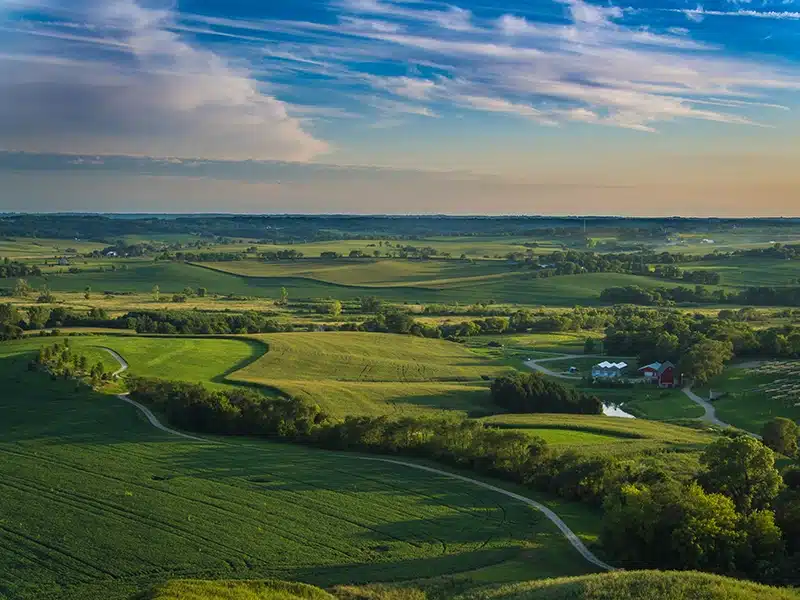
Green Bay, Wisconsin, Airbnb Laws
Short-Term Rental Laws in Green Bay, WI
Green Bay regulates short-term rentals (STRs) under Sec. 44-1580(j) of the Green Bay Municipal Code, administered by the city’s Community and Economic Development Department. The city’s STR framework operates within Wisconsin’s statewide “Right to Rent” law (Wis. Stat. § 66.1014), enacted in 2017, which prohibits municipalities from banning rentals of seven consecutive days or longer but gives cities broad authority to set their own permit, inspection, tax, and enforcement requirements. On March 3, 2026, the Green Bay Common Council unanimously approved amendments to the local ordinance adding transparency requirements, structured enforcement procedures, and house rules posting obligations.
- Definition of Short-Term Rental: A short-term rental in Green Bay is any residential dwelling unit provided to transient guests for compensation for fewer than 28 consecutive days. Rentals of 28 or more consecutive days are exempt from the STR ordinance entirely.
- Homeshare Exemption: Owners who share their primary residence with a guest during the rental period — a “homeshare” — are not required to obtain a Short-Term Rental Permit (STRP). However, a Brown County Health Inspection is still required, and some arrangements may qualify as a Bed & Breakfast. Contact the Community & Economic Development Department (920-448-3300) to confirm how your situation is classified.
- Licensing & Registration: Before advertising or accepting guests, hosts must obtain a City of Green Bay Short-Term Rental Permit (STRP). Permits run from July 1 through June 30 and must be renewed annually. A separate STRP is required for each property, and permits are non-transferable. A complete initial application requires the following: incomplete applications are rejected without processing:
- Completed STRP Initial Application (PDF) with a local representative identified
- $500 application fee (payable via GovPayNow)
- Proof of registration with the City of Green Bay Treasurer for Brown County room tax (the city submits this to Finance on your behalf; allow 5–10 business days)
- Proof of registration with Brown County Public Health and a completed initial health inspection ($492)
- A sample lease agreement confirming guests must comply with parking, noise, and other city ordinances
- Proof of insurance
- Proof of condominium association approval or property owner consent to rent, where applicable
- Renewals: The renewal window is May 1–June 30. The renewal fee is $250 if submitted on time or $500 if submitted late.
- Local Representative Requirement: Every STRP must designate a local representative who lives or works within 30 minutes of the STR and can respond to issues at the property. The city verifies this as part of the permit process.
- Operational Requirements: Once permitted, STR operators must follow these rules year-round. The city-issued placard must be displayed facing the street right-of-way at all times; failure to do so results in a $75 fee. Pertinent city ordinances must be posted inside the property for guests, along with written house rules clearly stating parking restrictions, noise limitations, and local representative contact information. On-site advertising beyond the placard is prohibited, basements cannot be used as sleeping space without proper egress, and no RVs, campers, tents, or other temporary structures may be used for guest occupancy.
- Taxes: STR operators in Green Bay have tax obligations at both the state and local levels. At the state level, hosts earning $2,000 or more annually from STR income must register with the Wisconsin Department of Revenue for a sales and use tax seller’s permit and collect Wisconsin’s 5% state sales tax plus applicable county sales tax. Hosts can register using Form BTR-101 and are subject to regular filing requirements; the Wisconsin lodging tax guide (Publication 219) covers obligations specific to lodging providers in detail.
- Enforcement & Penalties: The March 2026 amendments established a structured enforcement process: permit holders who fail to comply with city rules are first subject to a correction meeting before any suspension or revocation can occur. Revoked permit holders must wait 12 months before reapplying. Violations can also result in financial forfeitures, and both property owners and renters can be held accountable. Advertising without a valid permit results in noncompliance fees. For urgent complaints about an active STR, contact Green Bay Police at 920-391-7450.
- More Information: The City of Green Bay’s official STR page has the full rules, fee schedule, and links to all application materials. The STR FAQ page answers common permit questions. Hosts can look up whether a property address already has an active permit via the STR Address Lookup tool. For zoning and compliance questions, contact the Compliance Inspector at 920-448-3397.
The proof of insurance mentioned in the application is vague in terms of what coverage is adequate to apply. Based on other Wisconsin cities and other state laws, it most likely refers to liability insurance. However, only liability insurance will not cover everything in a short-term rental, including but not limited to loss of income, property damage, and squatter protection.
Proper Insurance offers policies tailored to the specific needs of short-term rentals, including the liability that most municipalities require. In addition to that, we offer protection for the worst-case situations that crop up when running a short-term rental, such as bedbugs, property damage, and squatters.
Lake Geneva, Wisconsin
New Airbnb Laws Hosts Need to Know
With easy access to outdoor activities, including lakes and hiking trails, Lake Geneva has grown into a popular vacation spot. With this growth, the City recognized the need for short-term rental guidelines and accepted new Airbnb laws.
The City settled on a number of requirements for hosts when applying to operate a short-term rental. All following documents and payments must be received before an application is accepted:
- State of Wisconsin Tourist Rental House License
- City Room Tax Application Form with payment of $10.00
- City Business license application with payment of $25.00
- An administrative fee, which is currently $750 annually
- Proof of valid property and liability insurance for the dwelling unit. The insurance must show appropriate proof of the home’s use as a short-term rental.
The City also requires specifics for the property, including a floor plan of the dwelling and a site plan including parking spaces and trash storage areas for guest use.
Quote Your Short-Term Rental Today
Registering with the state and city is only the first step in starting a short-term rental business-whether it is as an investment or to earn extra money on unused rooms. Insurance not only protects your guests and home but also your income and investment. Proper Insurance specializes in policies made for short-term rentals. Proper leads the Nation in short-term rental insurance, with over 100,000 policies written in all 50 states. Backed by Lloyd’s of London and exclusive endorsements from vacation rental leaders such as Vrbo, Proper Insurance is built on world-class insurance coverage. Proper’s policy covers vacation homes, townhouses, condos, duplexes, cabins, cottages, apartments, and more. With expert vacation rental underwriters, we can tailor a policy specific to your short-term rental property.
Please note: The information provided is intended as a guide and may not be comprehensive or current. Regulations may change and could vary by area or situation. Always consult local authorities or a legal professional to ensure you have the most accurate information for your short-term rental property.


