
Should You Allow Pets at Your Vacation Rental? Pros and Cons of Pet-Friendly Airbnbs

Should you allow pets at your vacation rental? For most hosts, yes—pet-friendly listings widen your guest pool, command higher nightly rates, and can attract responsible travelers. But allowing pets also raises your liability exposure, and dog bites are among the costliest animal-related claims in the U.S., costing Homeowners insurers $1.862 billion in 2025. The right answer comes down to one thing: whether your policy covers pet and animal liability with no breed exclusions, both on and off your property.
Standard Homeowners and Landlord policies often exclude guest-caused and pet-related damage — and we’ve seen this play out many times: a guest violates the house rules, sneaks in a pet, and the host is held responsible for the damage or injury it causes. The Proper Policy includes Pet & Animal Liability Coverage on a Commercial General Liability (CGL) base that follows your guests off-premises.
- Should You Allow Pets at Your Short‑Term Rental?
- Pros of Allowing Pets at Your Vacation Rental
- Cons of Allowing Pets at Your Vacation Rental
- Your Insurance May Not Cover Animal Incidents
- Service Animals and Short-Term Rentals
- You Decided to Allow Pets at Your Airbnb. Now What?
- Upgrade Your Short-Term Rental Insurance Today
- Pet Liability FAQs for Short‑Term Rental Hosts

TL;DR: Allowing pets can make your listing more competitive, but it raises your liability exposure—dog bites are among the costliest animal-related claims in the U.S., and hosts can be named even when the dog isn’t theirs. Standard Homeowners and Landlord policies often exclude guest-caused and pet-related damage, and many restrict specific breeds. Before you allow pets, verify your policy covers pet and animal liability with no breed exclusions and extends off-premises.
Should You Allow Pets at Your Short‑Term Rental?
More travelers than ever are searching for pet‑friendly vacation rentals, and “allows pets” has become a deciding factor for many bookings on platforms like Airbnb and Vrbo. For hosts, welcoming pets can mean a larger guest pool, higher nightly rates, and increased occupancy—but it also introduces serious liability risks. Animal‑related incidents like dog bites, property damage, and neighbor claims are among the most common and costly liability issues tied to vacation rentals. And this isn’t a far-fetched scenario: According to the Insurance Information Institute, more than 4.5 million people are bitten by dogs each year in the United States, most of them children, totaling billions of dollars in losses due to medical costs and legal settlements.
Pros of Allowing Pets at Your Vacation Rental
Allowing pets at your short-term rental can be a powerful amenity for those deciding what vacation home to book for their family. Allowing pets at your vacation home provides many benefits to your short-term rental business, like:
- Widening your guest pool. Allowing pets can open your rental to an extra 70% of guests who own pets and don’t want to leave them behind. IntelliHost’s 2025 study found that allowing dogs can improve Airbnb platform visibility by 28%.
- Earning more revenue. As a short-term rental that allows pets, you have the option to charge a higher price or add a pet fee.
- Attracting more responsible guests. Many hosts have reported that pet owners have been some of the most responsible guests that they have. They believe that pet owners already have the responsible trait of owning an animal and that they will respect your home. However, even the most responsible pet-owning guests can’t prevent every possibility of damage. Accidents do happen, especially when animals are involved.
- Improving your reputation. A pet owner may recommend your property to others looking for pet-friendly options in the area. The guest might also leave you a tail-wagging review for making their furry family members welcome at your property.
Understand Proper’s Pet & Animal Liability Coverage, and learn how our policy is designed for risks of STRs, from furry friends to not-so-friendly wildlife.

Cons of Allowing Pets at Your Vacation Rental
As the owner of the short-term rental business, you can be held responsible for the actions of your guest’s pets on your property and in your community, and you can even be held responsible for your neighbor’s pet’s actions toward your guests. It could be argued that without your vacation rental home, the guest would not have been in the area, and therefore, the accident would not have happened. Here are some additional considerations for having a pet-friendly short-term rental:
The Risk of Dog Bites and Airbnb Guests
Dog bites are one of the most serious liability risks short‑term rental hosts face when allowing pets. If a guest’s dog injures a neighbor, delivery driver, or passerby, the injured party may pursue claims not only against the dog owner, but also against the host who allowed the pet on the property. Hosts can also face liability in the opposite scenario. If a guest is bitten by a neighbor’s dog while staying at a short‑term rental, the host may be accused of failing to disclose known risks in the surrounding area or contributing to the conditions that placed the guest there. Short‑term rental hosts are often surprised to learn they can be named in dog bite claims even when the dog isn’t theirs, as explained in the video.
While these situations may seem unlikely, dog bite claims tied to short‑term rentals occur regularly and often involve significant legal defense costs and settlements. Because the incident would not have occurred if the short‑term rental were not in operation, hosts can find themselves financially responsible—even when the dog involved is not theirs.
Flea Infestations Aren’t Rare in Vacation Rental Homes
Another risk exposure for pet-friendly rentals is the potential for flea infestations. Fleas are tiny bloodsucking parasites that can hitch a ride from an animal and infest your vacation rental property, putting you at risk of lost revenue due to cancelled bookings and even expensive professional pest control treatments. Pet‑related liability exposure isn’t limited to bites, either—infestations like fleas brought in by guest pets can lead to cancelled stays, lost income, and remediation costs, which is why hosts should understand how flea coverage for short‑term rentals works.
Pet Damage at Short-Term Rentals
We all know that pets can cause damage, whether it’s destroying a screen door or tearing apart the couch, and now they could be doing it at your rental, a place they are unfamiliar with and likely anxious in. Most policies have exclusions in their policies that restrict coverage for ‘guest-caused damage’, which includes their pets. So, in the case of a guest’s dog damaging your home, a standard Homeowners or Landlord policy would not respond and would have you take it up with your guest.
Barking and Noise Concerns for STRs
No one likes a barking dog in the middle of the night or during the day, especially the neighbors. You don’t want to receive a call from your angry neighbors, reporting that your guest’s dog is disrupting the neighborhood. These unwanted disruptions contribute to the further pushback against short-term rental properties in the market, resulting in more regulations and bans.
Pets at Airbnbs Can Worsen Guests’ Allergies
This might not be the first thing that comes to mind when allowing pets at your vacation rental, but it’s important to consider. Allowing pets could turn away guests who have allergies to pets. It’s important to consider that some have extreme reactions to pet dander, and while rare could result in serious health concerns for your guest and likely legal trouble for the owner if a pet was snuck onto the property by a previous guest.
Your Insurance May Not Cover Animal Incidents
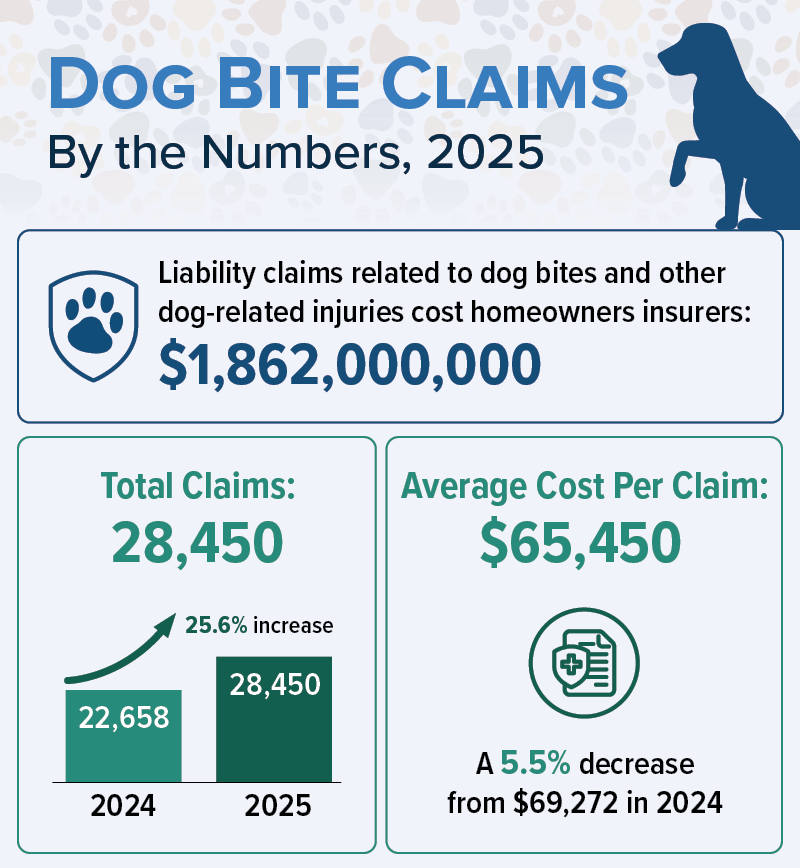
Dog bite incidents are among the most costly animal‑related liability claims in the United States. According to the Insurance Information Institute, Homeowners insurers reported 28,450 dog‑bite claims in 2025, totaling $1,862 million in losses, a 25.6% increase in claims from the prior year. The average cost per dog bite claim reached $65,450, nearly double the 2016 level, driven by rising medical costs and higher legal judgments.
Because of this, whether you choose to allow dogs at your short-term rental or not, it’s important to look at your insurance policy to see if you are covered for animal/pet liability. Not all policies, including Homeowners, Landlord, and Commercial policies, cover pet liabilities, and/or they may specifically exclude certain dog breeds, dogs with a history of biting, and exotic animals from coverage.
Dog Bite Claims by State: Where Liability Risk Runs Highest
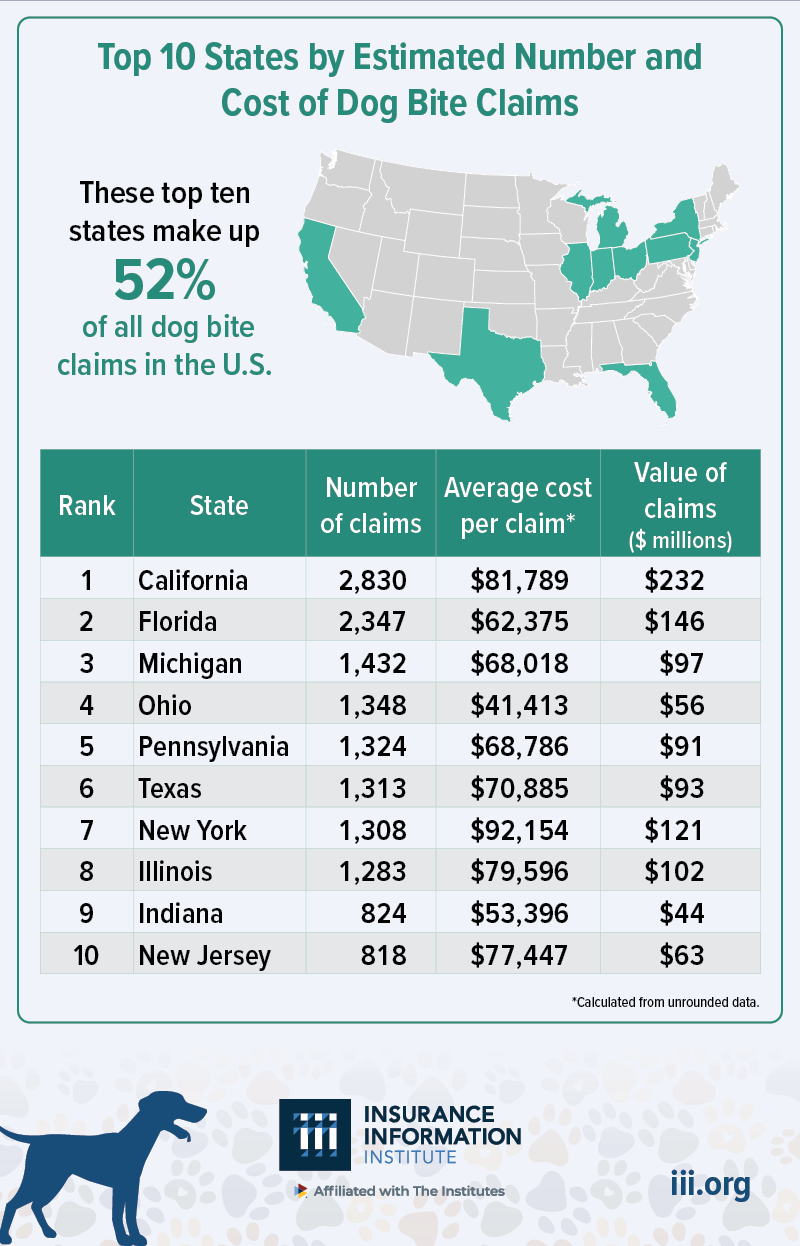
Dog bite risk isn’t spread evenly across the country. The average cost per claim has climbed 97% since 2016, from $33,230 to $65,450, and just 10 states account for 52% of all dog bite claims in the United States. If your short-term rental sits in one of them, your animal liability exposure runs higher than the national average.
California, Florida, and Michigan lead the country in dog bite claims, and the top 10 states together account for 52% of all claims in the United States. Average cost per claim varies widely by state — from roughly $41,000 in Ohio to over $92,000 in New York — so a host’s animal liability exposure depends heavily on location.
Understand Animal Exclusions in Standard Policies
When you’re a landlord, you can verify the type of dog your renter has at your property. When you’re a homeowner, you understand the risks of your own dog and are knowledgeable about their breed. However, as a short-term rental property owner, you may not always take the extra steps to confirm the type of animal, breed, or bite history for every booking at your property.
And depending on the severity of an Airbnb dog-related claim, the cost of vacation rental claims can vary widely. If your policy excludes pet liability, it’s the vacation rental owner’s responsibility to pay the legal fees and any settlement costs out of pocket.
The Proper Insurance policy does not have exclusions for types of animals or dog breeds, and offers $1,000,000 per occurrence of commercial general liability with an option to upgrade to $2,000,000 if desired. In addition to the commercial liability limit you choose ($1M or $2M), Proper Insurance will also pay for the cost of defense lawyers.
You Will Need Off-Premises Liability
If a guest’s dog bites your neighbor down the street, the incident happened beyond your property line—and that’s where many policies stop. Landlord and Homeowners policies typically carry premises liability, which only responds when an incident happens on your property. Without off-premises liability, the host is left to cover an off-property claim out of pocket. The Proper Policy is built on Commercial General Liability, so coverage isn’t restricted to your property line. Think of it as following your guests and their pets wherever they go during their stay.

Service Animals and Short-Term Rentals
Legally, you are required to make accommodations for people with service animals. This means that a person with a service animal can rent a property that typically does not allow pets in their house rules. While service animals should be appropriately trained to perform tasks for the handler, accidents can still happen, and you’ll want to be prepared for them if they do. Airbnb provides hosts with specific guidance on dos and don’ts when it comes to service animals, emotional support animals, and therapy animals. Hosts should familiarize themselves with each booking platform’s terms of service on the topic.
You Decided to Allow Pets at Your Airbnb. Now What?
After evaluating the pros and cons of allowing pets at your vacation rental, you’ve chosen to welcome man’s best friend to your property. After all, allowing pets can generate even more revenue, as long as you have the right insurance coverage for the risks that pets bring along.
Here are a couple of things to keep in mind to reduce any pet liability issues at your rental:
- Check with your HOA and local ordinances. Your local vacation rental regulations may disallow pets or exclude certain breeds. It’s also important to outline these regulations within your short-term rental agreement.
- Decide if you’d like to charge a pet deposit and if you’d like to refund it at the end of a stay or keep it.
- Verify your insurance policy. Make sure that your policy does not have exclusions or limitations for pet liability or animal liability. If it has pet/animal liability, then you’ll want to make sure it does not limit or exclude certain breeds or animals.
- Make sure your liability limit is high enough to cover dog bites. Proper insurance recommends carrying a minimum of $1M in liability coverage.
Upgrade Your Short-Term Rental Insurance Today
If you are sued because of a pet or animal harming either a guest or neighbor, unlike most insurance companies, Proper does not have a limitation or exclusion. If you are found liable for an incident with an animal, like a dog bite or a traumatizing bear scare at your short-term rental, Proper Insurance’s liability coverage would respond with:
- Commercial Liability Coverage – Proper Insurance’s policy carries $1M per occurrence of commercial liability, with an option to upgrade your limit to $2M. This coverage extends off-premises, should your guest or their pet get injured or cause injury away from your property.
- Legal Defense Cost – In addition to the limit you select as your liability coverage ($1M or $2M) Proper Insurance will cover the legal defense fees associated with the liability claim.
Proper Insurance is the nation’s leading short-term vacation rental insurance provider, with the most comprehensive policy on the market. We protect homes in all 50 states with unmatched coverage for your property, revenue, and business liability, customized to include guest-caused theft/damage, liquor liability, amenity liability (bikes, kayaks, hot tub, etc.), bed bugs, squatters, and more.
Give us a call at 888-631-6680 to receive a comprehensive coverage comparison, or submit a request for a quote today.
Pet Liability FAQs for Short‑Term Rental Hosts
Can I allow pets at my vacation rental?
Yes
—most vacation rental and holiday rental platforms allow hosts to set their own pet policy. The insurance consideration is the same regardless of what you call the property: confirm your policy covers pet and animal liability with no breed exclusions, since standard Homeowners and Landlord policies often exclude guest-caused pet damage.
Can I be held liable if a guest’s dog bites someone?
Yes. Short‑term rental hosts may be held liable for injuries caused by a guest’s pet, especially if the rental allowed animals or benefited financially from pet‑friendly bookings. Claims can include medical costs and legal defense fees.
Does Airbnb or Vrbo cover dog bites?
Coverage is limited and situational. Platform protections may not apply to off‑premises incidents, may have exclusions, and do not replace a dedicated insurance policy designed for short‑term rentals.
Does Homeowners insurance cover dog bites at a short-term rental?
Often, no. Standard Homeowners policies frequently exclude guest-caused and pet-related losses, and many restrict specific breeds or animals with a bite history. Because a short-term rental is a commercial use of the home, hosts should verify their policy covers pet and animal liability with no breed exclusions and extends off the property.


