
Real Short-Term Rental Insurance Claims (And What They Cost)

Insurance is easy to think about in the abstract—until a claim actually happens. Nick Massey, Chief Sales Officer at Proper Insurance, walked mid-term rental expert Jesse Vasquez through real settled claims from Proper’s own book of business: what went wrong, what it cost, and why the type of coverage in place decided the outcome.
- "What Happens When a Guest Damages a Property on Purpose?"
- "Why Do Building Codes Matter in a Liability Claim?"
- "Can a Broken Chair Really Lead to a Lawsuit?"
- Comprehensive Airbnb Liability Insurance Is Critical
- Real Airbnb Liability Insurance Claims Proper Has Responded To
- How to Check If Your Short-Term Rental Insurance Covers These Claims
“What Happens When a Guest Damages a Property on Purpose?”
Guest damage splits into two categories that most policies treat very differently: accidental damage and damage a guest causes deliberately. The second one is where standard coverage tends to stop.

Nick Massey, Chief Sales Officer
People came into this place with the intention to throw a party and they completely destroyed this cabin in Washington….$103,000 is what we ended up paying for this three-bedroom cabin in Washington State, and that included their lost business revenue for all the repairs that had to be made.
Most residential Landlord policies draw a hard line at malicious or intentional guest damage and exclude it entirely—Property Entrustment is built specifically to cover the scenario where a guest crosses from an accident into something deliberate. Worth noting what the payout included: not just the rebuild, but the revenue lost while repairs were underway.
“Why Do Building Codes Matter in a Liability Claim?”
A property built before a code requirement existed isn’t exempt from it once it’s operating as a short-term rental. Here’s what that looked like in a real claim.
This claim that happened in 2017 is why. So this was also an arbitrage where this happened at. And you can see the tile stairs and the photos on the left. You see that there’s no handrails. This home was built in 1988 and so building code at that time didn’t require a handrail on the interior stairs. Elderly lady slipped and fell down the stairs, broke her ankle, sued for a million. We ended up settling on that loss for $375,000…That attorney cost is $22,000 in this case.
Building code as of 2015 requires that any stairs, interior, exterior, with four or more risers, requires a graspable handrail. And so that is what the attorney is going to go after. And so this $60 handrail could have saved $400 and some odd thousand dollars in this situation.—Nick Massey
The gap between a $60 part and a $375,000 settlement isn’t really about the handrail—it’s about defensibility. Once a plaintiff’s attorney can point to a current code requirement the property didn’t meet, negligence gets much easier to argue. Walking a property against current building code costs nothing and is the cheapest liability work available. Nothing here is legal advice; how a court weighs code compliance varies by jurisdiction.

“Can a Broken Chair Really Lead to a Lawsuit?”
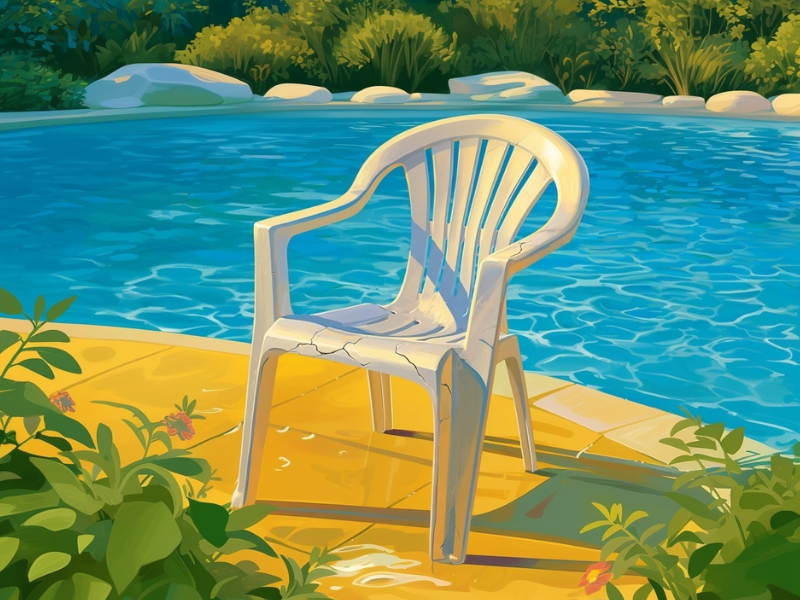
These silly little plastic chairs. This was $51,000 in loss for medical only, and another $8,000, almost $8,400, for the attorney on this one… You look at this and you’re like, this silly, stupid little school chair… it’s at the property. They’ve been a vacation rental forever and somebody who might be a little bit bigger in size sits on this chair thinking it’s safe. It breaks, they go to the hospital, now they’re suing you.
—Nick Massey
Read the number carefully: $51,000 covered medical costs alone, with roughly $8,400 in attorney fees on top. Furniture that’s aged out, or was never rated for the weight and turnover volume a rental sees, is a liability exposure regardless of how minor it looks on a walkthrough.
A $60 Handrail Led to a $375,000 Settlement
See real short-term rental insurance claims Proper has paid—from a guest party to a broken chair—and the coverage decision behind each one.
Comprehensive Airbnb Liability Insurance Is Critical
As an Airbnb host, your first business order is to ensure you have adequate Airbnb liability insurance. When we think of insurance, we typically think of property coverage for perils such as wind, fire, and water damage; your Airbnb rental property is a substantial financial asset, so it makes sense. But liability insurance should be examined in greater detail as it could ultimately sink your Airbnb rental operation.
Proper Insurance is the leading provider of Airbnb liability insurance in the United States, and we have seen and responded to just about every liability claim there is to see. Our written policies cover all 50 U.S. states in virtually every vacation rental or short-term rental Airbnb market. We’ve seen, defended, and ultimately settled millions in Airbnb liability insurance claims.
Why Exclusions Matter with Liability Insurance
A concept to understand with Airbnb liability insurance is exclusions, as it’s ultimately exclusions that result in no coverage, or lack thereof. Most liability insurance policies state that coverage exists for all bodily injury or property damage claims that the named insured could legally be held liable for. Then, the Airbnb liability insurance contract piles on the exclusions, and it’s your responsibility to know and understand the contract limitations.
A few easy examples to easily demonstrate Airbnb liability insurance exclusions would include communicable disease, which means if a renter used a hot tub, developed a rash, and then later claimed they got the “hot tub rash” from your property, the communicable disease exclusion could rightfully deny defense and coverage, leaving the Airbnb host on their own to defend themselves and ultimately settling the claim or lawsuit.
Real Airbnb Liability Insurance Claims Proper Has Responded To
Liability claims at a short-term rental rarely announce themselves. A guest gets hurt, a lawsuit follows, and the outcome comes down to whether the host had real coverage behind them. Below are actual liability claims Proper has responded to at short-term rental properties, and how each was resolved.
Pool Drowning — $1,000,000 Settlement
A two-year-old drowned in a swimming pool at a rental property. The claim was resolved with a $1,000,000 settlement, the kind of catastrophic liability exposure a platform guarantee is not built to absorb.
Carbon Monoxide Poisoning — $1,000,000 Settlement
A guest was seriously impaired by carbon monoxide poisoning during their stay. Proper responded to the claim, which was settled for $1,000,000.
Rope Swing Collapse — $120,000 Settlement
A rope swing on the property gave way, causing a guest to break their leg. The claim was settled for $120,000.
Stairway Fall — $403,579 Settlement
A guest slipped and fell down a staircase that lacked an adequate handrail. The claim was resolved for $403,579.
Ice Buildup Fall — $299,292 Settlement
Ice accumulated at an entry door, leading to a serious fall. Proper responded to the resulting claim, which was settled for $299,292.
Broken Chair Injury — $61,426 Settlement
An aging chair broke while a guest was using it, resulting in injury. The claim was settled for $61,426.
These are only a few of the liability claims that can arise at a short-term rental. When you regularly open your doors to strangers, an injury and a lawsuit can become a matter of when, not if. The The Proper Policy offers some of the broadest short-term rental liability protection in the industry, including coverages many hosts never think about: liquor liability, communicable disease, invasion of privacy, coverage for bed bugs and fleas, amenity liability on and off premises, and assault and battery.
How to Check If Your Short-Term Rental Insurance Covers These Claims
None of these claims started as a catastrophe. A missing $60 part, a chair nobody thought to replace, a party that got out of hand—the loss wasn’t the trigger; the coverage gap was. Pull your own declarations page and check whether guest-caused damage, off-premises liability, and building-code-driven claims are actually covered, or excluded the way a standard Homeowners or Landlord policy would exclude them. If you’re not sure what to look for, start with these questions to ask your insurance broker before your next renewal. Call 888-631-6680 or verify your insurance.


